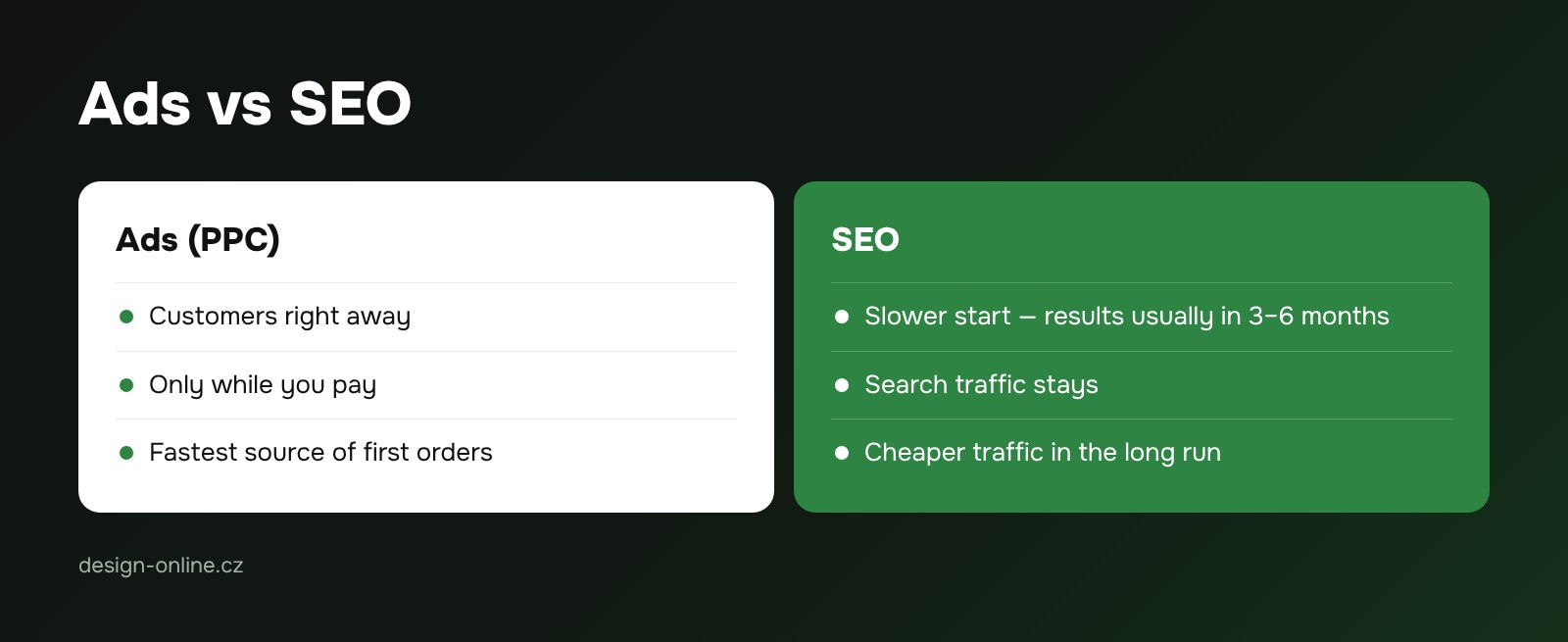
Ads bring customers immediately, but only while you keep paying. SEO is slower, yet search traffic stays. E-shops have their own SEO challenges: thousands of pages, filters that create duplicates, and products that come and go. Here is the checklist we follow.
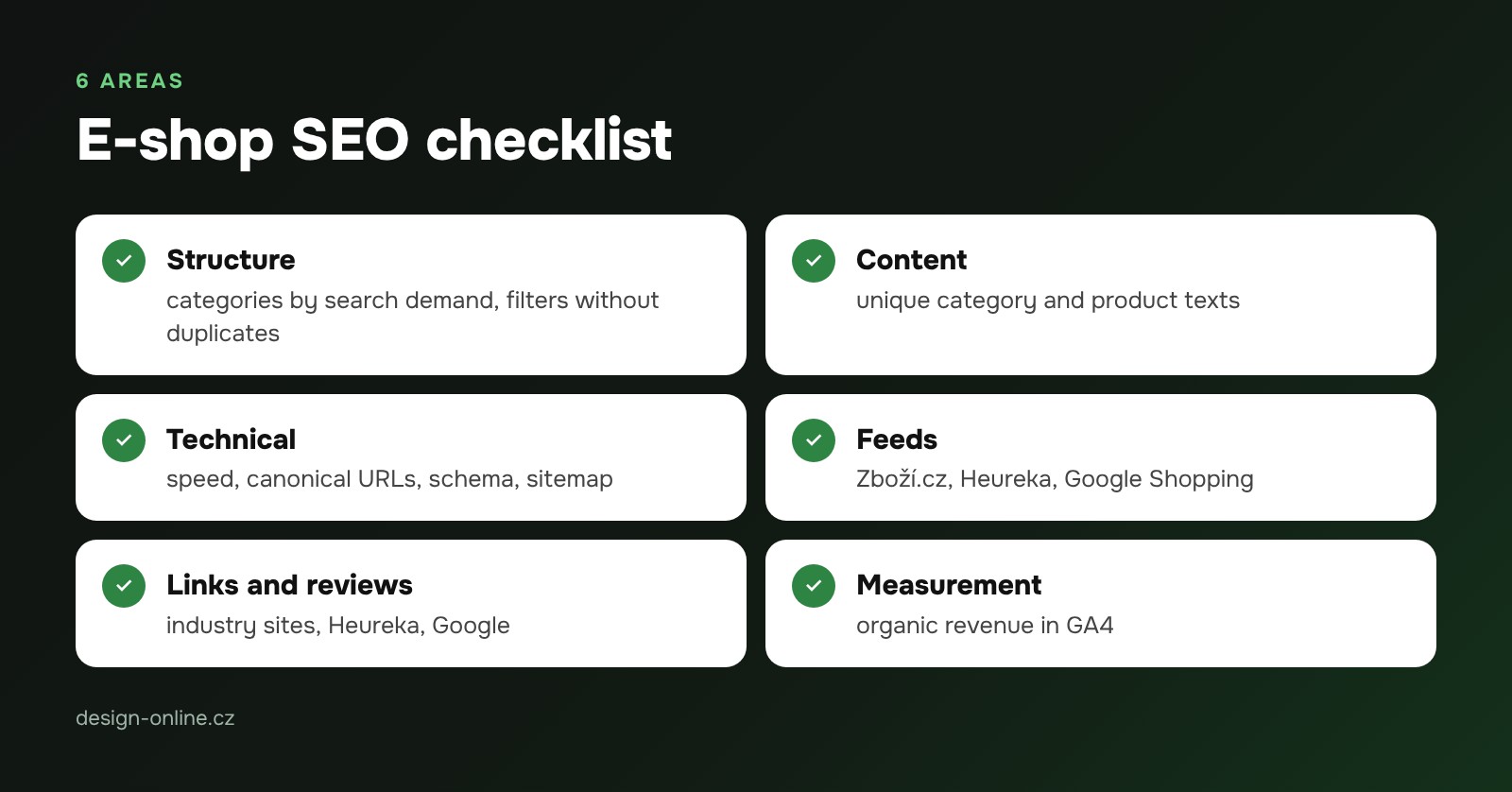
1. Category and filter structure
- Build categories around how people search, not around your warehouse. “Women’s running shoes” deserves its own page, not just a filter.
- Create separate indexable pages for important combinations (brand + type, material + type).
- Block the remaining filter combinations from indexing (noindex or canonical), otherwise you end up with thousands of near-identical pages.
- Every product should be reachable within a few clicks from the homepage.
2. Category and product content
- Every category needs unique text: a short intro at the top and more detailed buying advice at the bottom.
- Write your own product descriptions. The manufacturer’s text is already on a hundred other stores.
- Write titles and meta descriptions that make people click — with the main benefit, price or delivery.
- Answer the questions customers have (size, material, compatibility). AI assistants pick up these answers too.
- If you sell to Czech customers, the store must be in Czech: Google and Seznam rank pages in the language of the search.

3. Technical SEO
- Speed — especially on mobile. Compressed images (WebP), lazy loading, as few unnecessary scripts as possible.
- Duplicates — a product listed in several categories must have one canonical URL.
- Pagination and out-of-stock products — don’t delete out-of-stock items, keep the page with alternatives; redirect permanently discontinued products (301).
- Structured data (schema) for product, price, availability and rating.
- Sitemap and robots.txt without errors, checked in Google Search Console and Seznam Webmaster.
4. Feeds for Zboží.cz and Heureka
Zboží.cz (Seznam’s shopping comparison) and Heureka are the most popular price comparison sites in Czechia and a strong source of traffic. A good feed with accurate names, categories and attributes helps you rank better there — and you can reuse the same data for Google Shopping.
5. Links and reviews
- Links from industry websites, articles and reviews increase your store’s credibility.
- Verified reviews on Heureka and in your Google Business Profile build trust with both customers and search engines.
- Don’t buy bulk links from directories — they are more likely to hurt.
6. Measure results
Track search traffic, rankings of key categories and above all revenue from organic traffic in Google Analytics 4. Rankings are a means; orders are the goal.
What e-shop SEO costs and when to expect results
First results usually come in 3–6 months, later for new stores and in competitive niches. With us, an e-shop SEO audit costs from 12,900 CZK and ongoing e-commerce SEO from 15,500 CZK per month — see current figures in our pricing. We are not VAT-registered, so prices are final.